Vicky Calder is not dead yet.
Her family will cross water for a funeral. They would not come for her birthday.
Terminally ill and tired of the polite distance that has settled over her family, Vicky stages her own memorial with the help of her best friend Efia and Reverend Janet Brodie.
The family arrives in Rothesay expecting a funeral. Instead they find an eleven-page binder, assigned seating, surrendered phones, a birthday cake covered in burning black candles and a running order that includes LIVES, TESTIMONIES, PERSONAL CONTRIBUTIONS, RECONFIGURATION & FORFEITURE and ADMISSIONS & CONFESSIONS.
Vicky listens from the room next door.
Her father has brought the woman he left her mother for. Her brother Gareth arrives with four suitcases, a failing relationship and a eulogy largely about himself. Connie brings Caleb, who has prepared a barefoot wushu display. Pauline brings corrections.
Then the rules begin.
Nobody may lie — including by omission, politeness or repeating versions of family history everyone has previously agreed to accept. Each person must sit beside the person who knows them best, then make a statement Vicky believes they have never said in full.
What begins as an exquisitely organised memorial becomes an attempt to discover whether the things this family has always called love were actually love at all.
A family film with a trapdoor in it
AS I LIVE & BREATHE is a blackly comic ensemble drama about the stories families construct to survive one another — and what happens when somebody refuses to keep telling them.
It is not a mystery about whether Vicky is alive. The audience knows almost immediately.
The tension comes from something more uncomfortable: what happens when everyone else finds out, and what Vicky has forced them to reveal before they do.
The film moves between individual stories before the family converges at the memorial, compresses into a single increasingly volatile room, then fractures again afterwards as everybody deals with what has been said.
The ceremony gives the story structure. The people give it jeopardy.
There are Jägerbombs, funeral flowers, a registrar, a brass bell, a drainage book, a birthday cake, an eleven-page rules binder and a recorder-and-guitar duo called BLACK RIBBONS LIKE BLOOD IN THE SEA.
But underneath all of it is a simple question:
What do you owe the people you love when telling the truth may hurt them more than the lie?
WHY ROTHESAY
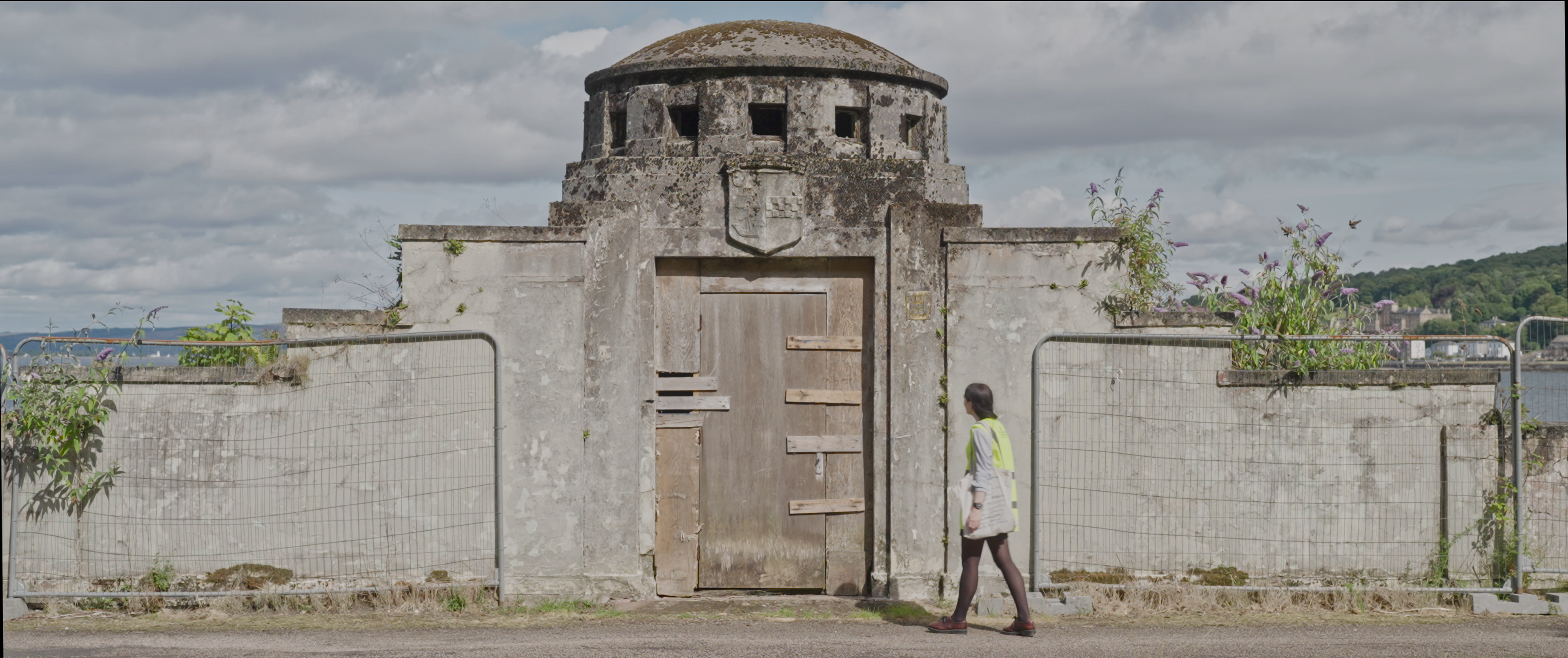
Rothesay is not being used as picturesque scenery around the story. The film is built around it.
People arrive by ferry. They wait, walk, separate and meet again because of the geography of the island. The clubhouse beside the water becomes the centre of the film; afterwards the story disperses through cafés, bedrooms, streets, beaches, shops, graveyards and the shoreline.
That physical containment matters. Everybody has travelled to the same small place for Vicky. Once the memorial is over, they cannot simply dissolve back into a city.
They keep encountering one another.
And Vicky is still there.
Subject to alteration at the discretion of the deceased.