
Keep conditions stable.
Monitor temperature, salinity, oxygen and water quality. Maintain life-support alarms and a rehearsed backup response.
Connection does not establish reciprocity. Permissions remain local to the session. Observer status confers no onward rights.
COMMON / Responsibility / 01
A life does not need to resemble ours to deserve our consideration.
Our policy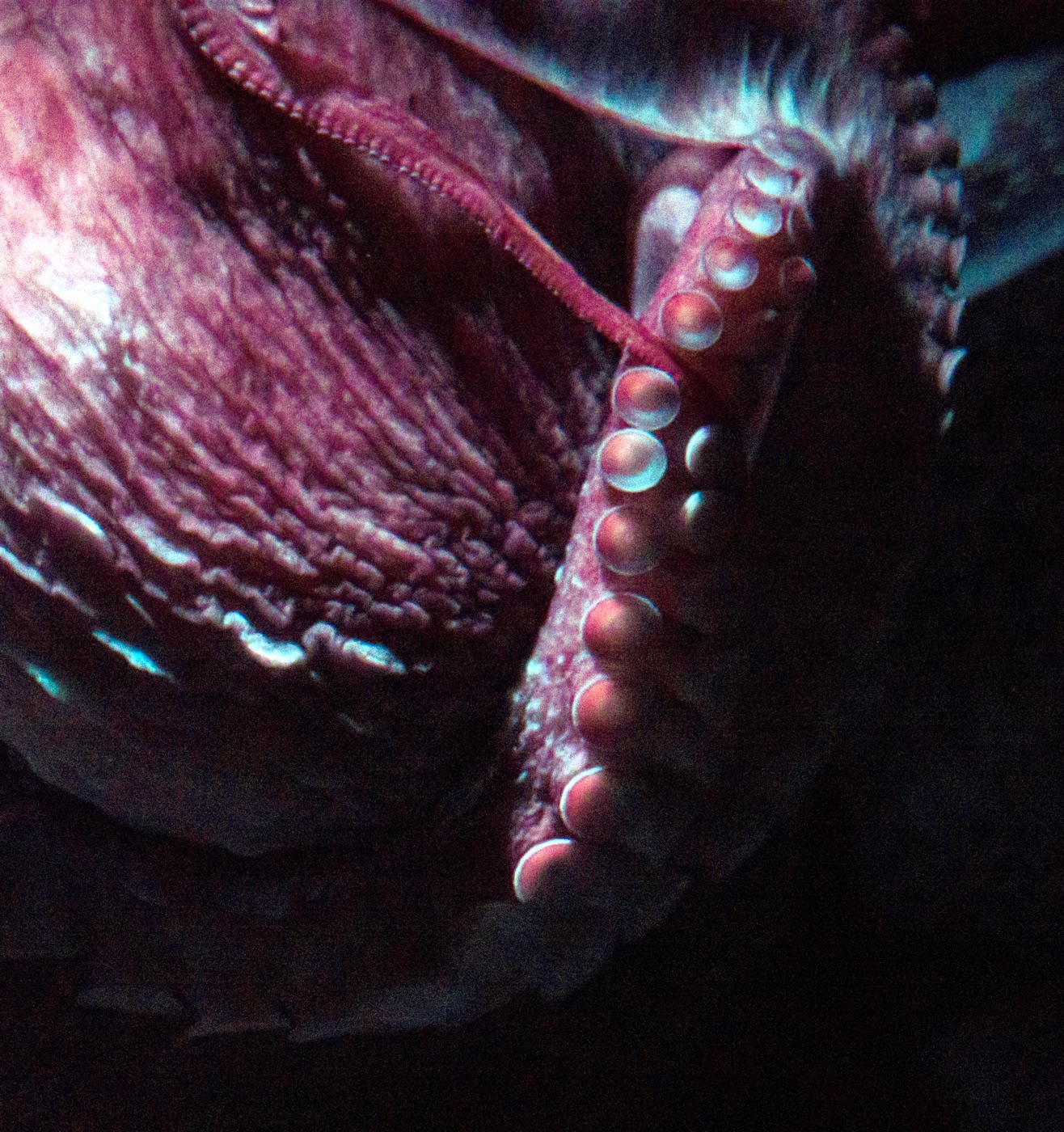
A statement from Mila
“We have become very good at making the extraordinary available. We should be equally good at allowing it to remain itself.
A life in our care is not an experience we own. It is a responsibility that continues when we leave the room.
I would like that responsibility to be taken seriously. Everywhere.”
Mila
Co-founder & systems architect, COMMON
COMMON policy statement / GPO–01
COMMON places the welfare of each animal before the value of its display, the convenience of its keeper or the interests of its sponsor.
We will not fund the capture or acquisition of giant Pacific octopuses for entertainment-led display. Any proposed involvement in rescue, rehabilitation or conservation must demonstrate a clear welfare purpose, specialist capacity and a documented plan for the animal’s continuing care.
For animals already in human care, our support is conditional on suitable habitat, opportunities to withdraw, individual welfare monitoring and access to specialist veterinary oversight. Public visibility and visitor interaction must never take precedence over these provisions.
Each supported institution must name a responsible welfare lead, keep auditable care records and report serious welfare incidents to COMMON without delay. Unresolved failures will pause new activity and trigger a corrective review; existing animals must not lose essential care as a consequence.
We will assess proposed partners against these commitments and review our position as evidence develops. A replacement animal does not close an incident. Continued care does.
For aquariums & care teams
Operational priorities for institutions caring for giant Pacific octopuses. Apply these alongside a species-specific care plan led by qualified aquarists and veterinary professionals.
Monitor temperature, salinity, oxygen and water quality. Maintain life-support alarms and a rehearsed backup response.
Provide secure dens, suitable space and varied surfaces. Inspect lids, pipework and other escape routes. Do not remove shelter to improve visibility.
Record feeding, behaviour and condition. Review changes with the care team; seek veterinary assessment when health concerns arise.
Provide safe, varied foraging and problem-solving opportunities. Observe the response and adapt the programme. Participation should be voluntary.
Discourage tapping and flash photography. Manage disruptive light, noise and vibration. Explain why an animal may remain out of sight.
Keep individual feeding and veterinary plans, transport protocols and provision for ageing and end-of-life care. Never improvise a release.
Care reference: Association of Zoos and Aquariums, Giant Pacific Octopus Care Manual (2014) ↗. This summary does not replace specialist husbandry protocols.
A continuing responsibility
Giant Pacific octopuses can solve puzzles, learn and interact with their caretakers. Their needs continue beyond the moments we find remarkable.